FOR IMMEDIATE RELEASE | October 19, 2026 | Winnipeg, Manitoba
EISHIA HUDSON’S FAMILY CALLS FOR ACCOUNTABILITY AND MEANINGFUL CHANGE AS INQUEST CONCLUDES
After more than six years seeking answers, Eishia’s family calls for meaningful action on Indigenous-specific racism, police practices, and independent oversight to prevent future tragedies.
WINNIPEG, MB — As the inquest into the death of 16-year-old Eishia Hudson concludes, her family is calling for meaningful changes to policing practices, training, and independent investigations to ensure that the lessons arising from her death are not forgotten.
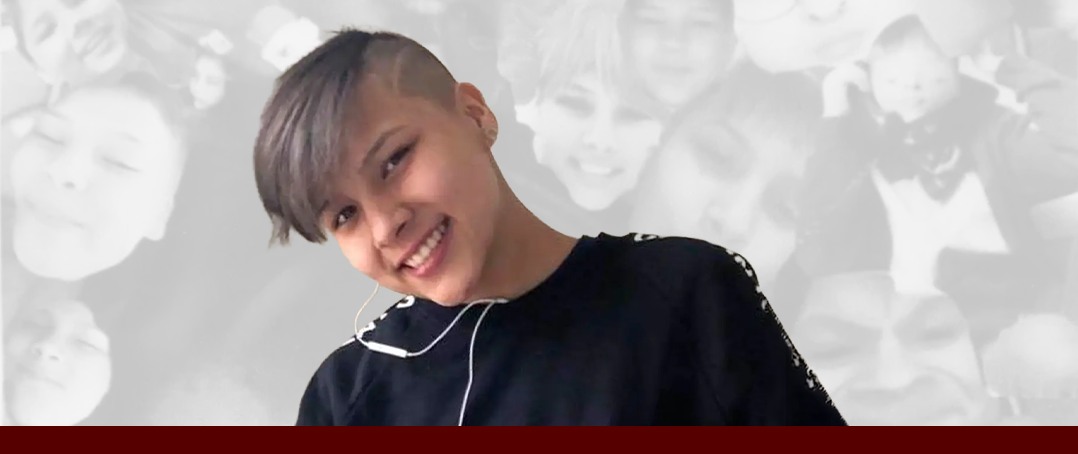
Eishia was a daughter, sister, and beloved member of her family and community. She was just 16 years old when she was shot and killed by a Winnipeg Police Service officer on April 8, 2020.
For more than six years, her family has carried the grief of losing her while continuing to seek answers about the circumstances surrounding her death.
“Eishia was only 16. She deserved the chance to grow up. We have spent six years fighting for answers and accountability. We don’t want another family to experience this kind of loss,” said William Hudson, Eishia’s father.
“Eishia was my baby. She was loved, she mattered, and she had her whole life ahead of her. I hope her story brings meaningful change, so that no other mother has to bury her child this way,” said Christie Zebrasky, Eishia’s mother.
“Eishia’s family has demonstrated extraordinary strength and determination throughout this process,” said Danielle Morrison, counsel for the family. “They have continued to show up, to ask difficult questions, and to advocate for change, not only for Eishia, but because they do not want another family to experience what they have endured.”
The family maintains that the absence of overt racial hostility does not necessarily establish the absence of racial bias. Questions about how Eishia’s conduct was characterized, how her actions were interpreted, and how officers assessed threats must be considered in the broader context of Indigenous people’s experiences with policing.
“We cannot meaningfully address Indigenous-specific racism in policing if we only look for explicit expressions of prejudice,” said Morrison. “Bias can influence how behaviour is interpreted, how danger is perceived, and how decisions are made. Those are precisely the kinds of questions that must be examined if we are serious about preventing future tragedies.”
CONCERNS ABOUT THE INDEPENDENT INVESTIGATION
The family has also raised significant concerns about limitations in the Independent Investigation Unit of Manitoba’s (IIU) investigation, particularly its treatment of civilian video evidence and the absence of forensic collision reconstruction.
The IIU’s use-of-force expert, Chris Butler, reviewed a video recorded by Mr. Dhillon but did not substantively address it in his written report. At the inquest, he explained that the video had not undergone forensic verification and that he was cautious about relying on it. He did not identify that concern in his report, and he acknowledged there was no specific evidence the footage had been altered.
For the family, this raises an important question: why was potentially significant video evidence not forensically examined so that its reliability and evidentiary value could be properly assessed? The IIU also did not obtain a forensic collision reconstruction, despite the importance of the vehicle’s movements and the officers’ positions. The family has called for clearer forensic investigative standards and disclosure of evidentiary limitations.
“Independent oversight must be thorough as well as independent,” said Morrison. “When potentially important evidence is not forensically examined, families deserve to understand why and what limitations that creates.”
A CALL FOR MEANINGFUL REFORM
In its written and oral submissions, the family supported the recommendations advanced by Inquest Counsel and proposed additional measures intended to strengthen police practices, independent investigations, and accountability.
Among the areas addressed in the family’s recommendations are:
- Police use of force and vehicle encounters: Improved training on tactical positioning, danger zones, deescalation, containment, and alternatives to the use of force.
- Indigenous-specific racism and youth: More meaningful training and assessment concerning implicit bias, Indigenous youth, trauma, adolescent development, and fear-based flight.
- Police communications: Greater accuracy and neutrality in the language used during critical incidents and in public communications following police-related deaths.
- Independent investigations: Stronger forensic investigative standards, including collision reconstruction where warranted, and greater transparency about evidentiary limitations.
- Support for families: Improved access to family liaison services, legal and financial assistance, counselling, cultural supports, and meaningful participation in the inquest process.
- Public accountability: Greater transparency and public reporting concerning the implementation of inquest recommendations.
“This inquest was never simply about examining the final seconds of Eishia’s life,” said Morrison. “It was about understanding the circumstances that led to her death, examining the decisions that were made, and identifying what must change so that another young Indigenous person does not lose their life in similar circumstances.”
The family hopes the inquest will result in recommendations that can be implemented and evaluated, rather than commitments to change that cannot be meaningfully measured.
Grand Chief Kyra Wilson of the Assembly of Manitoba Chiefs will join members of Eishia’s family and legal counsel to speak about the conclusion of the inquest, the concerns raised throughout the proceedings, and the meaningful changes the family hopes will follow.
The family has taken time together following these emotionally demanding proceedings and looks forward to sharing its reflections and calls for accountability. Media are invited to attend.